If your Florida home is getting older, your insurance company may ask for a 4-point inspection before it writes or renews your policy. The electrical section is one of the most common reasons a home gets flagged. Usually the problem is the panel, the type of wiring or signs of wear. The good news is that most electrical findings can be fixed, and fixing them before the deadline keeps the policy on track.
What a 4-point inspection covers
A 4-point inspection is a short look at four systems: the roof, the electrical system, the plumbing and the heating and air conditioning. It is not a full home inspection. The insurer wants to know the age and condition of each system and whether anything raises the risk of a fire, a leak or a claim.
Many Florida insurers ask for one on older homes, often once a house reaches about 25 to 30 years old, and some ask sooner. Every company sets its own rules, so your agent is the best source for your insurer’s cutoff and what it will accept.
What the inspector looks at in the electrical section
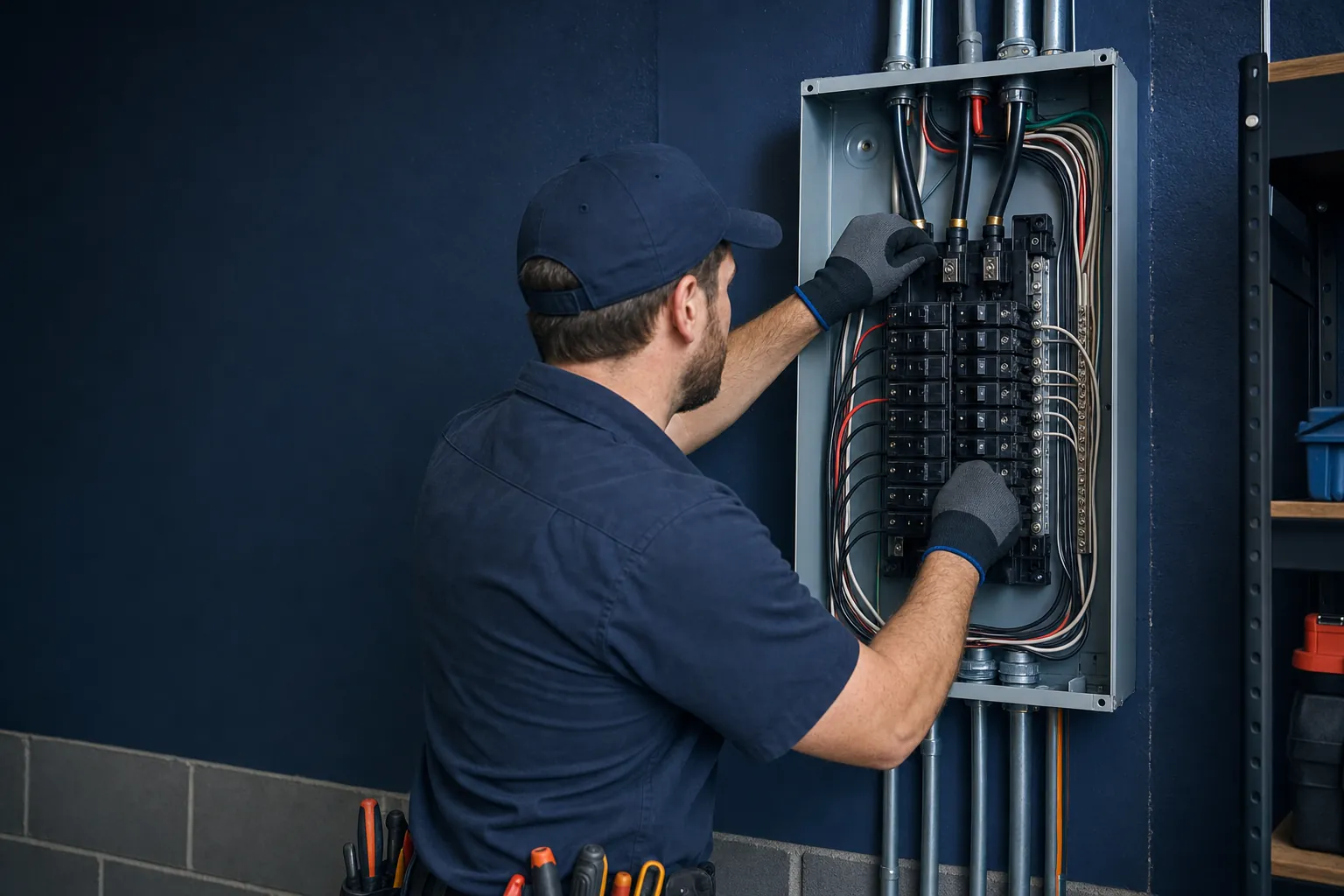
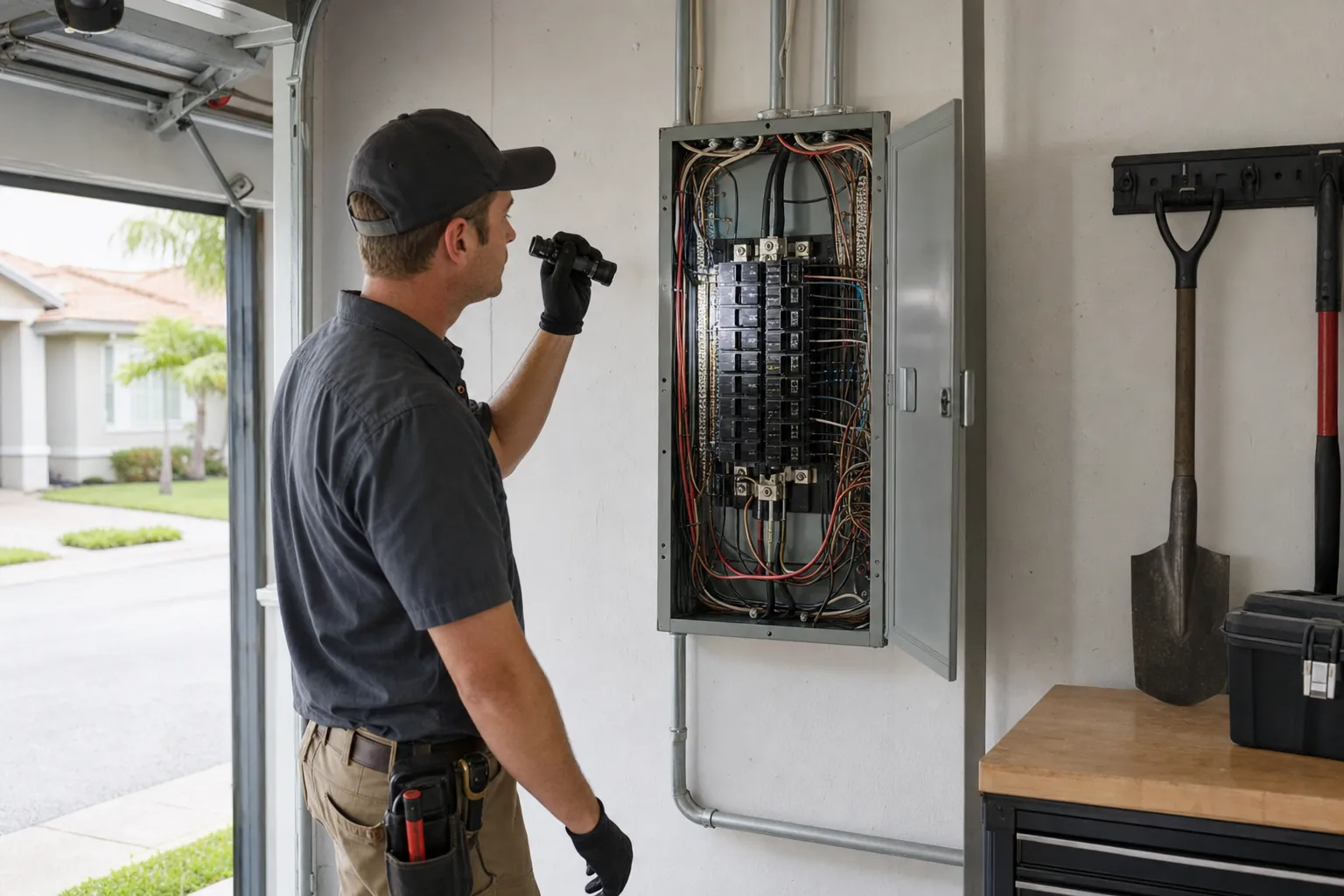
The inspector opens the panel cover and looks at the main service, the breakers and the wiring they can see. The report usually notes:
- The panel brand, its age and the size of the electrical service (amps)
- The type of branch wiring: copper, aluminum, cloth-covered or knob-and-tube
- Breakers that are the wrong size for the wire, or two wires under one breaker screw (a “double tap”)
- Open slots or missing knockouts that leave live parts exposed
- Rust, scorch marks, melted insulation or signs of overheating
- Hazards elsewhere, such as missing cover plates, exposed splices or amateur wiring
Anything listed as a hazard or an “unacceptable” component can stop the policy until it is corrected.
Panels and wiring that often get flagged
Insurers pay close attention to equipment with a poor track record. These come up again and again in older Brevard County homes:
- Federal Pacific (Stab-Lok) panels. Many insurers will not cover a home with one.
- Zinsco and Sylvania-Zinsco panels. Usually flagged for replacement.
- Some Challenger panels and certain older breaker types.
- Fuse boxes in place of a breaker panel.
- Single-strand aluminum branch wiring, used in some homes built in the 1960s and 1970s.
- Cloth-covered or knob-and-tube wiring in very old homes.
Having one of these does not mean your home is unsafe today, but it does mean many insurers will want it replaced or repaired before they write the policy.
How to fix electrical findings before your renewal
Start with the inspection report or the letter from your insurer. It will list exactly what needs attention. Then:
- Call early. Panel replacements need a permit and an inspection, so do not wait until the week your policy renews.
- Ask your agent what they will accept. For aluminum wiring, for example, some insurers accept approved repairs at each connection while others want rewiring.
- Keep the paperwork. Your insurer will usually want proof of the work, such as the permit and the final invoice, and sometimes an updated 4-point report.
For most homes the fix is a panel upgrade: the old panel comes out and a new one goes in with properly sized breakers. If the home needs more capacity for air conditioning, a pool, an EV charger or a generator, it is a good time to plan for that too. Where the wiring itself is the problem, whole-home rewiring may be the long-term answer.
Why it is worth doing even without an insurance deadline
The items insurers flag are the same ones electricians worry about: equipment that may not trip when it should, connections that can loosen and overheat, and panels that were never designed for today’s air conditioning, kitchen and charging loads. Replacing them makes the home safer and usually makes the next inspection, sale or insurance switch much easier.
When to call Advent Electric
Call when your insurer or inspector flags the electrical system, when you are buying an older home, or when you know your panel is a Federal Pacific, Zinsco or fuse box. Advent Electric can look at the panel and wiring, explain what the inspector is likely to see, and give you a clear scope and estimate. Advent Electric is a Florida Certified Electrical Contractor, license EC13006270, and qualifying work carries a one-year workmanship warranty.
Related services and guides
Talk through your inspection report.
Send Advent Electric the electrical items on your 4-point report and get a straight answer on what it will take to clear them.
Request a quoteFrequently asked questions
What is a 4-point inspection in Florida?
It is a short inspection many Florida insurers ask for on older homes. It covers four systems: the roof, electrical, plumbing and heating and air conditioning. The insurer uses the report to decide whether to write or renew the policy.
Which electrical panels fail a 4-point inspection?
Insurers commonly flag Federal Pacific (Stab-Lok), Zinsco or Sylvania-Zinsco, some Challenger panels, fuse boxes and panels showing heat damage, rust or missing covers. Each insurer sets its own list, so ask your agent which ones they will not accept.
Does aluminum wiring fail a 4-point inspection?
Many insurers flag single-strand aluminum branch wiring, which was used in some homes built in the 1960s and 1970s. Depending on the insurer, approved repairs at each connection may be accepted, or rewiring may be required. Ask your agent what they will accept before choosing a repair.
How fast can Advent Electric replace a panel before my renewal?
Call 321-383-8198 as soon as you get the inspection report or the insurer’s letter. Advent Electric can look at the panel, explain the options and schedule the work, including the permit, so you have paperwork to send your insurer.