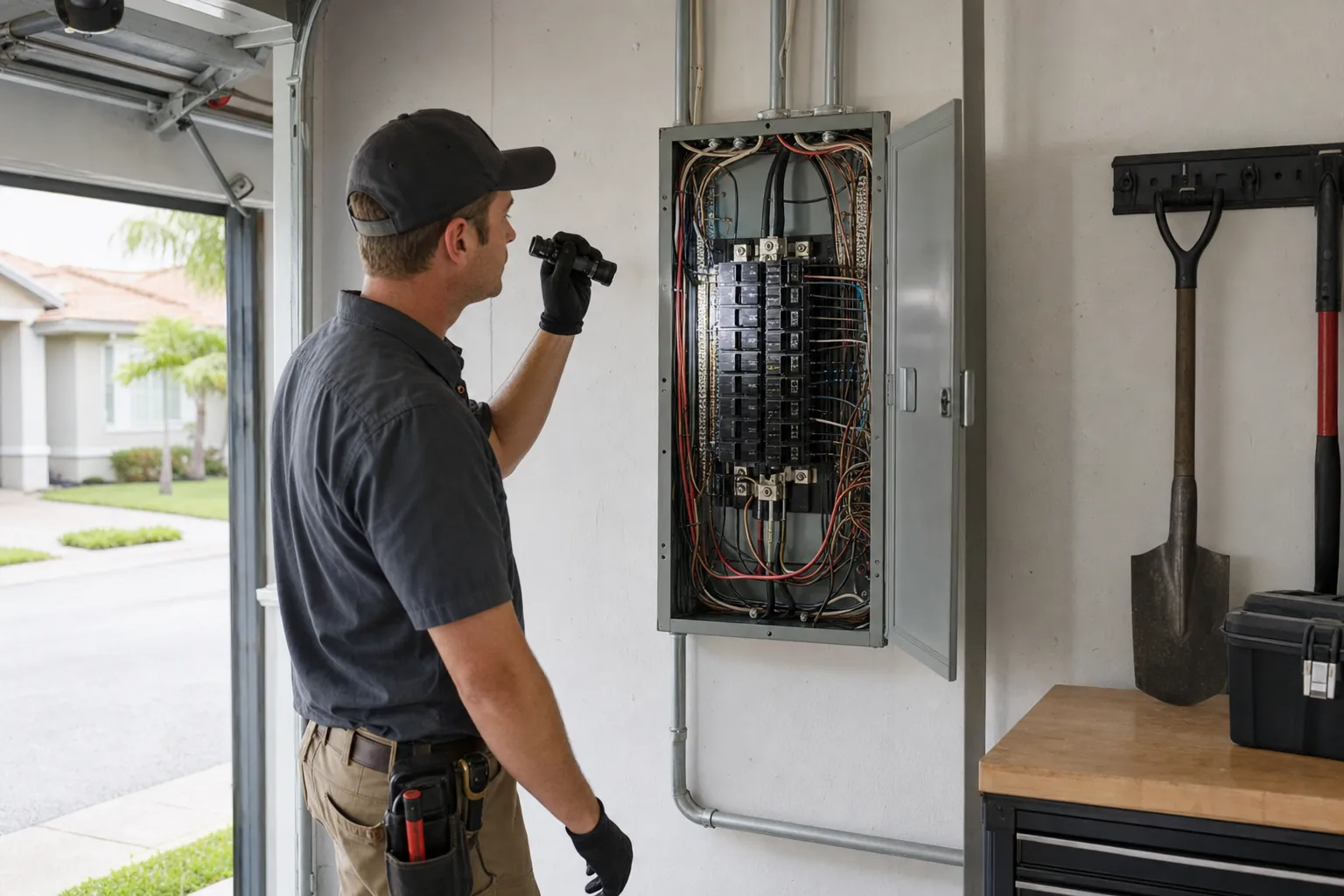
Federal Pacific and Zinsco panels were installed in many homes built from the 1950s into the 1980s, including plenty along the Space Coast. Both brands are long out of production, and both have a reputation for breakers that may not trip when they should. If your home still has one, it is worth knowing how to spot it and what your options are, before an insurance letter or a home sale forces the question.
How to tell what panel you have
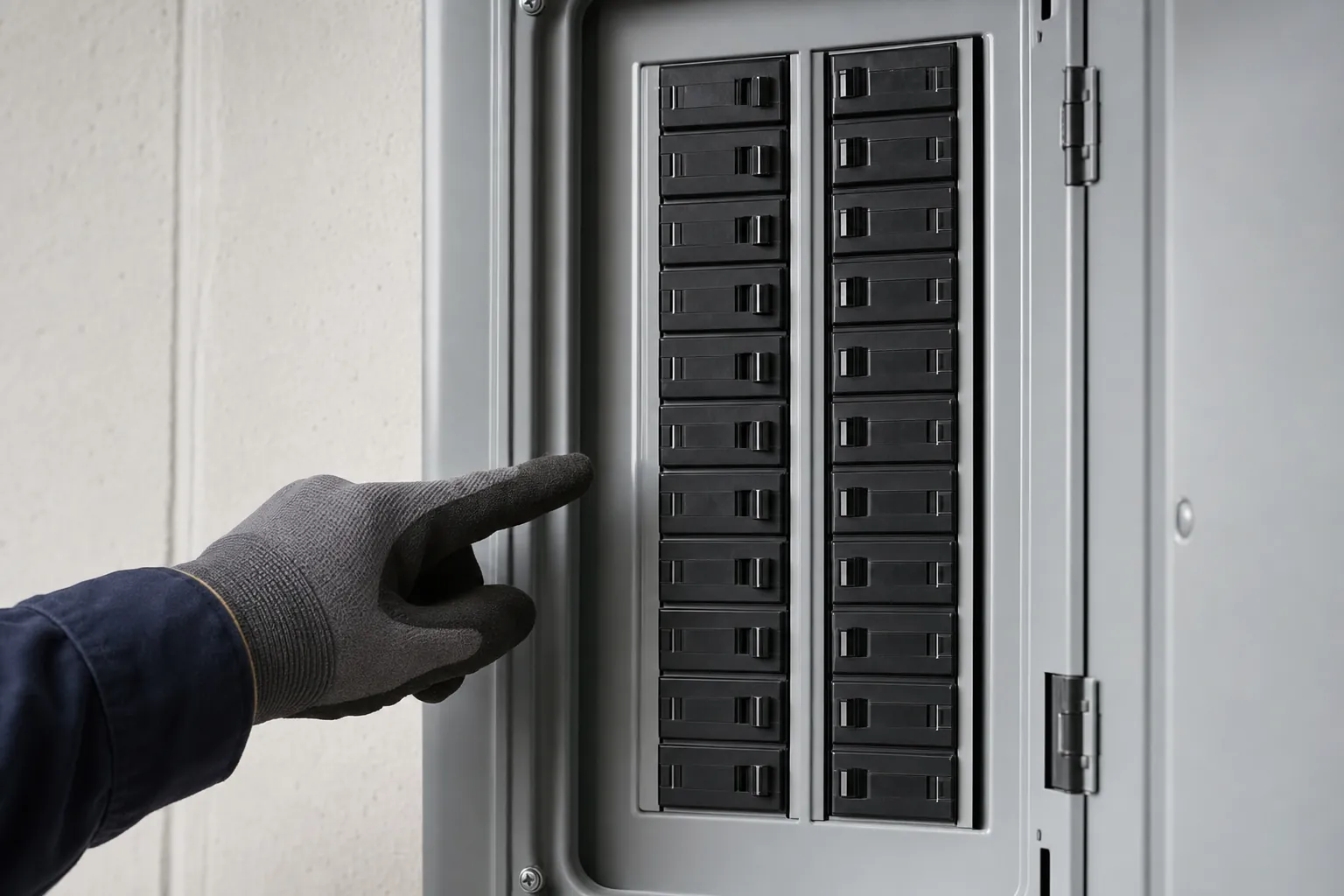
Open the panel door (not the inner cover) and look for the brand on the label inside the door or on the panel itself. Do not remove the inner cover or touch anything inside.
- Federal Pacific Electric (FPE): the label says Federal Pacific or FPE, and the breakers are often marked Stab-Lok. The breakers are usually thin, with red-tipped or black handles.
- Zinsco or Sylvania-Zinsco: the label says Zinsco or Sylvania, and the breakers often have colorful handles in blue, red, green or tan.
- If there is no label or you are not sure, take a photo of the open panel door and send it to an electrician.
Why these panels get flagged
The main concern with both brands is breakers that may not trip during an overload or short circuit, which is the one job a breaker has to do. Zinsco breakers can also lose good contact with the bar they plug into, which leads to heat and arcing. Federal Pacific Stab-Lok breakers were looked at by the U.S. Consumer Product Safety Commission in the 1980s; the agency closed its investigation without a recall, but many electricians and insurers still recommend replacement.
In Florida the question often comes from insurance. Many companies will not write or renew a policy on a home with one of these panels, and they often show up on a 4-point inspection.
Warning signs to take seriously
Whatever the brand, call promptly if you notice any of these:
- Breakers that feel warm, look scorched or have melted spots
- A burning smell or buzzing from the panel
- Breakers that trip often, or never seem to trip at all
- Lights that dim or flicker when large appliances start
- Rust or water stains on or inside the panel
What replacing a panel involves
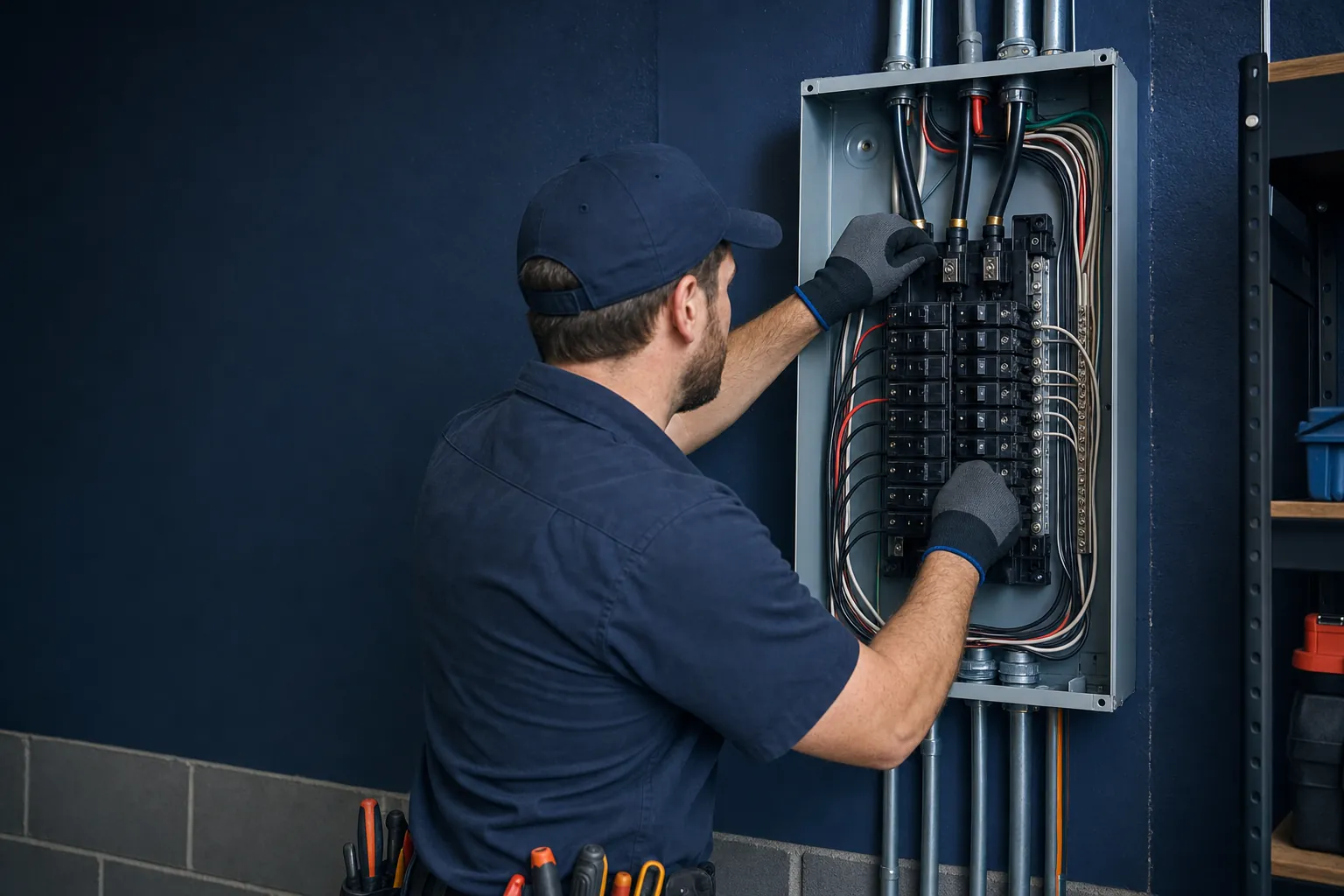
A panel replacement removes the old panel and breakers and installs a new panel with properly sized breakers, sized for how the home is used today. It needs a permit and an inspection. The power is off for part of the day while the work is done.
It is also a good time to plan for the future: more capacity for air conditioning, a pool, an EV charger or a standby generator, and a whole-house surge protector at the new panel.
When to call Advent Electric
Call if your panel is a Federal Pacific, Zinsco or Sylvania-Zinsco, if your insurer has flagged it, if you are buying a home that has one, or if you notice heat, smells or scorching at any panel. Advent Electric can confirm what you have, explain the options and give you a clear estimate for replacement. Advent Electric is a Florida Certified Electrical Contractor, license EC13006270.
Related services and guides
Not sure what panel you have?
Send Advent Electric a photo of your open panel door and get a straight answer.
Request a quoteFrequently asked questions
How do I know if I have a Federal Pacific panel?
Look at the label inside the panel door for the words Federal Pacific, FPE or Stab-Lok. If you cannot find a label, take a photo of the open door and the breakers and send it to an electrician. Do not remove the inner cover.
Is a Zinsco panel dangerous?
Zinsco and Sylvania-Zinsco breakers are known for losing contact with the bus bar and for not tripping reliably. Not every panel will fail, but many electricians recommend replacing them, and many insurers will not cover homes that have them.
Can I just replace the breakers?
Replacement breakers for these panels are hard to find and do not address the panel itself. In most cases the practical fix is replacing the whole panel with a new one.
Will my insurance require me to replace it?
Many Florida insurers will not write or renew a policy on a home with a Federal Pacific or Zinsco panel. Ask your agent, and keep the permit and invoice from the replacement to send them.